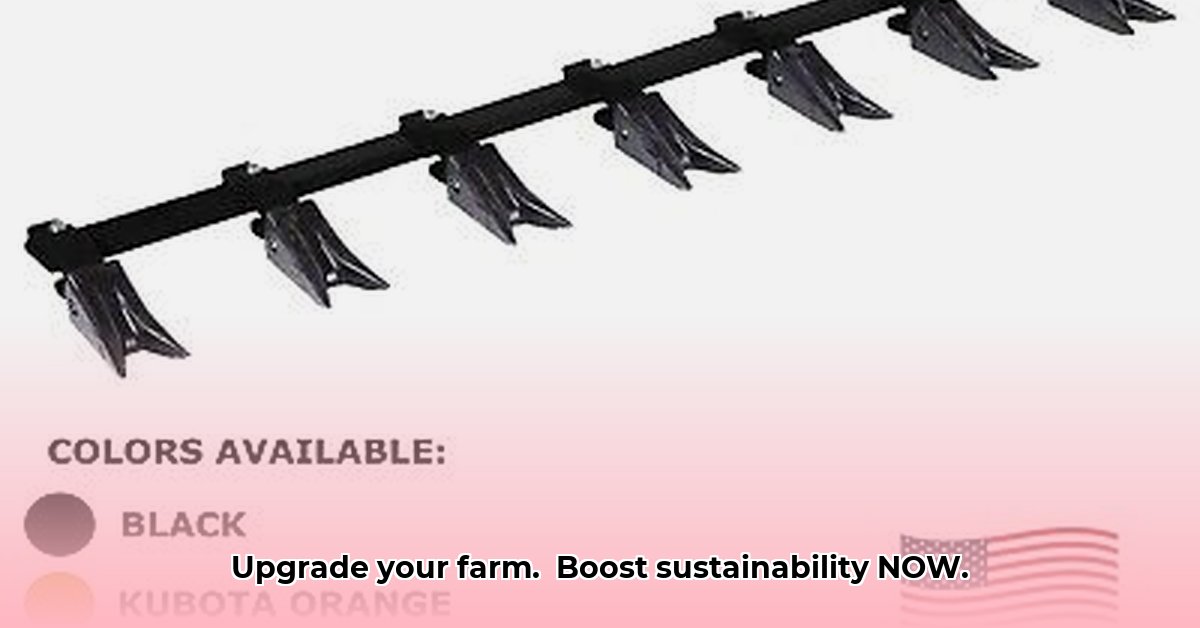
Want to boost your farm's sustainability and profitability? It starts with the right tools. This guide shows you how to choose the best Tractor Supply bucket teeth to improve soil health, save fuel, and increase your bottom line. We'll provide step-by-step advice on selecting appropriate teeth for your soil type, maintaining them effectively, and optimizing their use to minimize soil compaction and fuel consumption. For more on tractor buckets, see this helpful guide.
Choosing the Right Bucket Teeth for Sustainable Farming
Sustainable farming depends on healthy soil. Compacted soil hinders root growth, reducing yields and increasing reliance on fertilizers and irrigation. Your tractor's bucket teeth significantly impact soil health; the wrong teeth can worsen compaction, while the right ones can help maintain soil structure.
Understanding Soil Types and Their Impact
Different soil types require different approaches:
Clay Soils: Dense and prone to compaction. Broader, rounded teeth are crucial for gentle breakdown without causing further compaction. Aggressive teeth will only exacerbate the problem.
Sandy Soils: Less prone to compaction but easily eroded. Less aggressive teeth minimize disturbance and prevent topsoil loss.
Loam Soils: The "Goldilocks" soil – not too dense, not too loose. While you have more flexibility, minimizing disturbance remains key for long-term health.
Selecting the Optimal Bucket Teeth
- Assess Your Soil Type: Determine your soil's composition (clay, sandy, loam, etc.). This is the foundation of your decision.
- Review Tractor Supply's Options: Tractor Supply offers a range of bucket teeth; their descriptions specify suitability for different soil types.
- Consider Application: The ideal tooth will vary depending on whether you're digging, moving materials, or tilling.
- Seek Expert Advice: Don't hesitate to consult Tractor Supply staff for personalized recommendations.
Optimizing Bucket Tooth Use for Maximum Efficiency and Minimal Environmental Impact
Even with the perfect teeth, proper usage is critical.
- Avoid Overloading: Overloading compacts the soil and strains your tractor. Work within your bucket's capacity.
- Master Bucket Angle Adjustment: Experiment with angles to improve penetration and reduce the number of passes needed, saving fuel and minimizing soil disturbance. A slight adjustment can significantly improve efficiency.
- Find Your Optimal Speed: Too fast leads to surface damage and compaction; too slow wastes fuel. Aim for a speed that efficiently works the soil without excessive wear.
- Regular Maintenance: Inspect teeth regularly for wear and tear. Dull or broken teeth are less effective and can damage the soil. Replace worn teeth promptly.
Long-Term Benefits: A Sustainable and Profitable Farm
Investing in the right bucket teeth offers both environmental and economic advantages. Reduced soil compaction leads to healthier crops, decreasing the need for fertilizers and irrigation. Improved fuel efficiency translates into lower operating costs. It's a win-win: a more sustainable and profitable farm.
“Choosing the right bucket teeth isn’t just about today's harvest; it's about building healthy soil for future generations,” says Dr. Emily Carter, Soil Scientist at the University of Agriculture. “Investing in sustainable practices ensures the long-term health and productivity of your farm.”
Frequently Asked Questions (FAQs)
Q: How often should I replace my bucket teeth? A: This depends on usage and soil type. Regular inspection is key. Replace them when noticeably worn or damaged.
Q: Can I sharpen my bucket teeth myself? A: Yes, but ensure you use appropriate tools and techniques to avoid damage. Alternatively, consider professional sharpening services.
Q: What is the average lifespan of Tractor Supply bucket teeth? A: Lifespan varies widely based on soil type, usage intensity, and maintenance.
Q: Are there different materials for bucket teeth? A: Yes, Tractor Supply offers teeth in various materials, each with different durability and suitability for specific applications.
This guide provides a framework for making informed decisions about bucket teeth. The right choice contributes to a more sustainable and successful farming operation. Remember, healthy soil forms the foundation of a thriving farm.